Geriatric rehabilitation
Geriatric rehabilitation is a specialty of physical therapy and rehabilitation aimed at the elderly. It takes into account the overall aging of the body (physiological aging or senescence) as well as the intertwining of multiple chronic and acute pathologies. Unlike conventional orthopedic or sports rehabilitation, the geriatric approach does not aim solely at the recovery of a body segment or performance, but rather at preserving autonomy, preventing dependency, and improving quality of life. It seeks to keep the patient standing, mobile, and active in their daily activities.
Book this treatment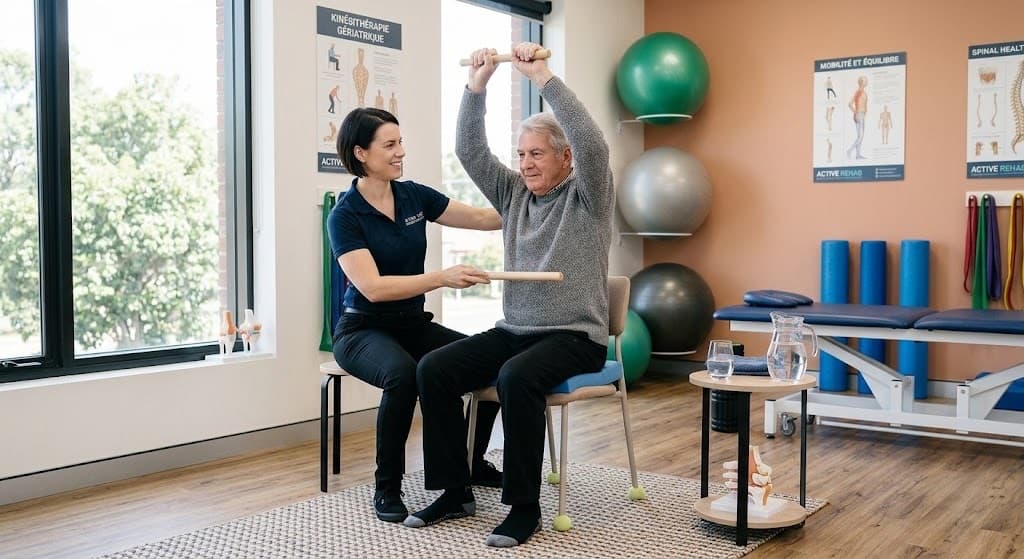
Main Conditions Treated Conditions encountered in geriatrics are often multiple in the same patient (multimorbidity): Osteoarticular and rheumatological conditions: Osteoarthritis (particularly gonarthrosis and coxarthrosis), osteoporosis with or without fracture complications (femoral neck fracture, vertebral compression fractures). Neurodegenerative and neurological disorders: Alzheimer's disease, Parkinson's disease, post-stroke sequelae (CVA). Cardiorespiratory conditions: Heart failure, chronic obstructive pulmonary disease (COPD), and exercise deconditioning. Motor deconditioning syndrome: Often secondary to prolonged hospitalization or bed rest, combining muscle wasting (sarcopenia) and stiffness. The Great Scourge: Balance Disorders and Falls With age, the sensory and effector systems that allow balance maintenance deteriorate: Decreased sensory input: Reduced visual acuity, vestibular disorders, and altered proprioceptive sensitivity (especially in the feet). Neuromuscular decline: Loss of muscle mass and strength, slowing of reaction times. Repercussions: These physiological and pathological changes expose the elderly person to post-fall syndrome (panic fear of falling again, loss of spatial awareness, withdrawal) and significantly increase the risk of fractures and permanent loss of autonomy. The Different Rehabilitation Techniques Used Treatment is always individualized, based on a comprehensive assessment, and adapted to the patient's cognitive and physical capacities: Balance and proprioceptive training: Exercises on stable then unstable surfaces (if safe), transfers (sit-to-stand), and dual-tasking (walking while talking or manipulating an object) to stimulate automatic responses. Analytical and functional muscle strengthening: Fighting sarcopenia through exercises to strengthen lower limbs and trunk stabilizing muscles to secure standing and walking. Joint remobilization and maintenance of range of motion: To counter stiffness related to osteoarthritis or immobility. Endurance reconditioning: Supervised walking, use of adapted stationary bikes to improve cardiorespiratory capacity and combat chronic fatigue. Therapeutic education and environmental adaptation: Fall prevention advice at home, learning techniques to get up after a fall, and choosing the most suitable walking aid (walker, cane).
Our activities
Photos and videos of our sessions will be added soon.
Our other services
Post-operative rehabilitation
Regain strength and mobility safely after surgery.
Learn moreBack and neck
Lasting relief from low back pain, sciatica and neck pain.
Learn moreSports physiotherapy
Treat a sports injury and return to activity without risk.
Learn moreTherapeutic massage
Release muscle tension and relieve pain.
Learn moreWomen's health
Caring support during and after pregnancy.
Learn morePediatric physical therapy
Pediatric rehabilitation is an essential specialty that supports a child's development, from birth to adolescence, in the face of congenital, genetic, neurological, or orthopedic disorders.
Learn moreNeurological rehabilitation
Adult neurological rehabilitation is a specialized care approach aimed at patients facing pathologies of the central or peripheral nervous system (stroke, traumatic brain injuries, multiple sclerosis, Parkinson's disease, spinal cord injuries, etc.)."
Learn moreAcupuncture , Dry Needling
Acupuncture rebalances the body's overall energy through meridians, while dry needling directly releases local muscle tension.
Learn moreRééducation en rhumatologie
Learn moreReflexology
Learn moreKinesithérapie Respiratoire
Learn moreRééducation des amputés
Learn moreRééducation des brûlés
Learn moreRééducation en gynécologie
Learn more